

A thyroid blood test can measure how well your thyroid gland is measuring. The thyroid is a small gland located in the lower part of your neck. The thyroid gland is responsible for regulating many processes like metabolism, generation of energy, etc.
Thyroid blood tests can identify hyperthyroidism and hypothyroidism in your body. The thyroid is a butterfly-shaped gland that produces thyroid hormones. It regulates numerous aspects of your body’s metabolism.
When the thyroid gland doesn’t work correctly, it can affect your entire body. The thyroid gland secretes two major hormones. These two important hormones are thyroxine (T4) and triiodothyronine (T3). Your healthcare practitioner will order a thyroid blood test if there are concerns with thyroid hormone levels.
Thyroid blood tests, also known as thyroid panels, are simple lab tests. The primary objective of these tests is to check the function of your thyroid glands. Here are the types of thyroid blood tests you should know.
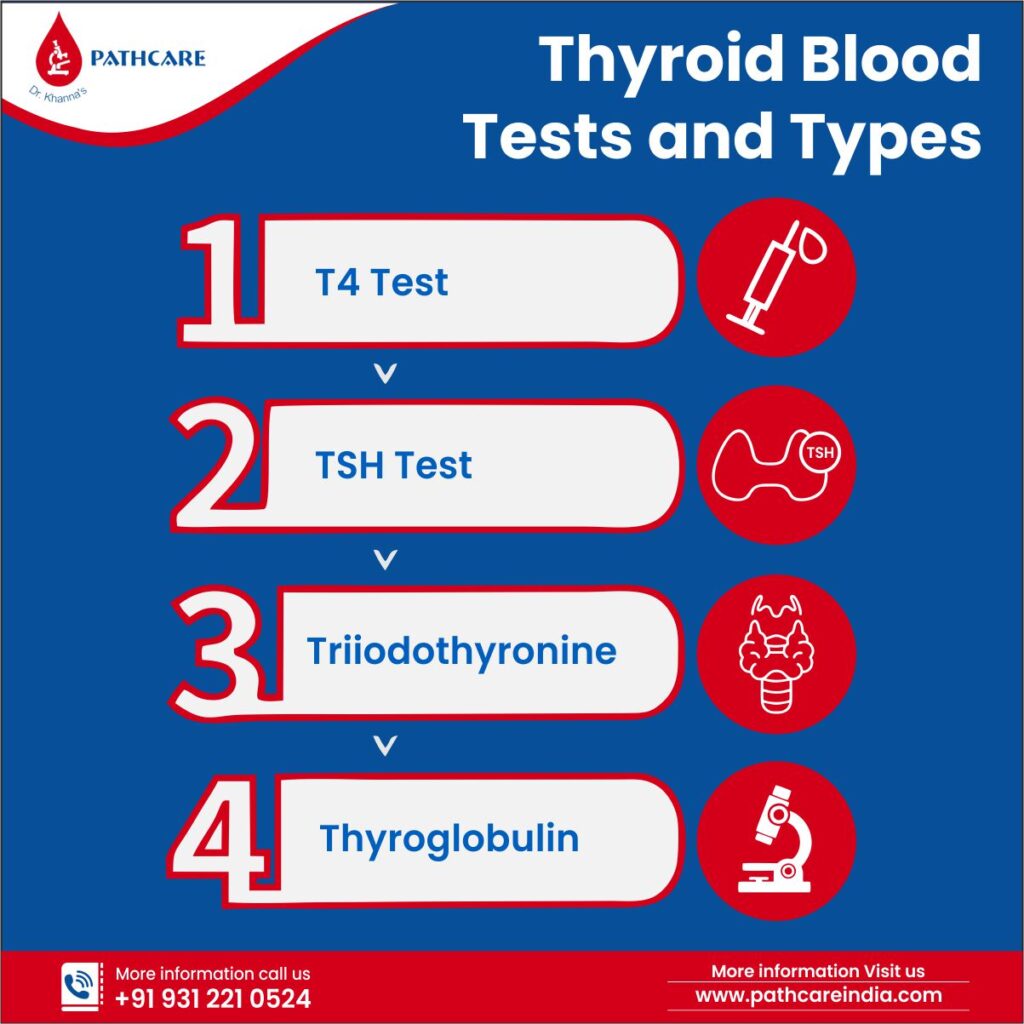
Thyroid Blood Tests and their Types
Thyroid function tests are a series of assessments that measure how well your thyroid gland is working. Some commonly available tests are T3, T4, TSH and T3RU. Thyroid blood tests can help diagnose various types of disorders. Here are the different types of disorders the panel test can identify.
- Tumours
- Thyroid cancer
- Graves’ disease
- Thyroid nodule
Here are the common types of thyroid blood tests you should know.
T4 Test
The T4 test measures the thyroxine levels in your blood. In the human body, T4 acts as a storage hormone. It mainly stays inactive. Your body converts it into T3 when required. The T4 test comprises the following two types.
-
Total T4
The total T4 test measures the total quantity of thyroxine in the bloodstream. It also includes the total amount of T4 attached to blood proteins.
-
Free T4
It is a test that only measures the amount of free thyroxine not associated with the blood proteins.
TSH Test
The TSH test can help identify the proper functioning of the thyroid gland. In most cases, doctors will recommend you undergo this test to analyse the secretion of thyroid hormone. If your thyroid gland is developing too many thyroid hormones, the pituitary gland will release TSH into the bloodstream. Here are some essential aspects of the Thyroid-Stimulating Hormone (TSH) test.
- This test measures the thyroid hormone levels
- It can identify lower levels of thyroid hormones
Triiodothyronine
Triiodothyronine, or T3, is the active thyroid hormone. The T3 hormone directs your cells to produce more energy, along with other functions. A vast majority of T3 in your system is always associated with proteins. Here are the following three ways in which a blood test can measure T3.
-
Free T3
It is not associated with proteins and is usable by the tissues.
-
Reverse T3
It is an inactive type of T3 hormone that attaches to thyroid receptors.
-
Total T3
The net amount of triiodothyronine in the bloodstream.
In some cases, reverse T3 can occupy the thyroid receptors. As a result, it can lead to the symptoms of hypothyroidism. It happens when your body is trying to conserve energy due to starvation.
Thyroglobulin
Thyroglobulin, also known as Tg, is a type of protein made by the thyroid gland. It is a tumour marker to aid in the treatment of thyroid cancer. The Tg test can tell healthcare providers if cancer treatments are effective or not. The Tg test can also ascertain the remission of cancer treatments.
Some of the additional blood tests may include the following:
Thyroid Antibodies
Autoimmune disorders are primarily responsible for causing thyroid disorders. In these disorders, the immune system attacks the normal thyroid cells. A thyroid blood test can help detect the following antibodies associated with an autoimmune disease.
- Thyroid-stimulating hormone receptor antibodies
- Thyroglobulin antibodies
- Thyroid peroxidase antibodies
What Common Symptoms Can Occur with Thyroid Disease?
If you have thyroid disease, you’ll experience various symptoms. Some of the common symptoms of hyperthyroidism include the following:
- Experience irritability, anxiety and nervousness
- Have trouble sleeping
- Feeling sensitive to temperature rises
- Having vision issues
Symptoms of hypothyroidism are as follows:
- Feeling fatigued
- Having a hoarse voice
- Abnormal weight gain
- Dry and coarse hair
Understanding the Test Results
The TSH test measures the level of thyroid-stimulating hormone in your blood. The TSH has a normal test range between 0.4 and 4 milli-international units. Therefore, if your symptoms depict hypothyroidism and you have a TSH reading over 4.5 mIU/L, you are at risk for hypothyroidism.
Your doctors may even ask you to undergo a diabetes test and a thyroid test. Both the T4 and TSH tests are suitable for newborn babies. It can recognise a low-functioning thyroid gland.
When left untreated, it can lead to developmental disabilities in children. The T3 test checks for the fluctuation of triiodothyronine. Higher levels of the T3 hormones can contribute to Grave’s disease.
Do you Need to Fast before a Thyroid Test?
Typically, you don’t need to fast before undergoing a thyroid test. But the lab technician will be able to guide you better. If you are experiencing other tests along with the thyroid test, your doctor may recommend you to fast. It is essential to consult your doctor before undergoing a thyroid test.
The Range for Thyroid Blood Tests
Here is the range for thyroid blood tests you should know.
- TSH- 0.4 to 4.5 mIU/L
- Total T3- The range should fall between 75 to 195 ng/DL
- T4- The range should be between 0.8 to 1.5 ng/DL
You can resume your normal activities after undergoing the thyroid blood test. However, you should avoid strenuous physical activities. In case of any discomfort, you can contact the diagnostic laboratory.
If you are looking for a full body checkup in Delhi, don’t look beyond Pathcare. Pathcare is the one-stop destination for patients suffering from thyroid-related disorders. Dr Khanna’s Pathcare lab is NABL-accredited and uses high-tech equipment for accurate results.